Laredo College

Introduction

The history of Laredo Community College (LCC) is closely tied to World War II, as the institution was created specifically to offer training to soldiers returning from the war. It was founded in 1947 and was then known as the Laredo Junior College.

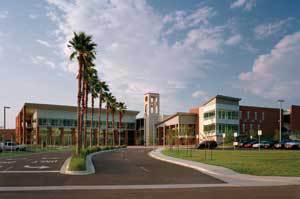
Starting with a single campus in Fort McIntosh (previously known as Camp Crawford), the college has grown over the years by increasing the number of students it admits each year. While only 13 students were enrolled at the college at its inception, today it admits more than 12,000 students each year. In addition to the original Fort McIntosh campus, LCC established an additional campus, the South Campus, in 2004.
Videos

Information Summary

Ranks 72nd in Texas and 1633rd overall. See the entire top 2,000 colleges and universities list
Overall Score (about) 70.7
Total Cost On-Campus Attendance $5,100
Admission Success rate N/A
Student Ratio Students-to-Faculty 15 : 1
Retention (full-time / part-time) 68% / 50%
Enrollment Total (all students) 10,181

Academics

LCC runs several degree and certificate programs. It offers Associate in Arts and Science Degrees as well as certificates. The Associate in Science (AS) or Associate in Arts (AA) degree courses offered by LCC are meant to enable the student to transfer to a four-year college or to prepare them for direct employment.

The number of courses available at the college is enormous enabling applicants a huge range of career choices. The college offers degrees in diverse fields such as Agriculture, Fine Arts, Biological Sciences, Computer Sciences and Business. Students enrolled into the college

Most Popular Fields of Study

Gallery

College Campus :: Laredo College

Admissions

LCC operates an open-door admissions policy to ensure that qualified applicants are not locked out of the college

Financial Aid

Students attending LCC have many sources of financial aid and a needy student will most probably obtain needed aid. Grants are the preferred form of financial aid for most students since they do not have to be repaid and at LCC there are several grant programs.

One such program is the Texas Educational Opportunity Grant (TEOG) which is available for students who are resident in Texas. Applicants to this grant have to meet additional conditions such as proving their financial need through their application with FAFSA. Successful applicants who wish to continue benefitting from TEOG are required to maintain a cumulative grade point average of 2.5 or higher and to complete 75% of the hours taken in the preceding academic year.

Similar to TEOG is the Texas Grant which was created in 1999. It is also open only to students who are residents of Texas and applicants are required to show the same satisfactory academic progress as is required under TEOG. Students attending LCC but are not residents of Texas are covered by the On-Campus Texas Public Education Grant (OCTPEG) which offers grants to cover various educational expenses.

A host of federal grant programs are also available to students attending LCC. These include the Leveraging Educational Assistance Partnership (LEAP) and the Special Leveraging Educational Assistance Partnership (SLEAP).

The Federal Pell Grant has helped students pay through college over the years and it just got better. While previously a student could only apply for a single Pell grant per academic year, beginning 2011, needy students will be able to benefit from two awards within an academic year. For students with financial needs which FAFSA considers exceptional, the Federal Supplemental Educational Opportunity Grant (FSEOG) offers up to $1,500 per semester.

There three types of federal loans that a student attending LCC can apply for. The Subsidized William D. Ford Direct Loan Program enables needy students to obtain subsidized loans which are sometimes quite substantial. Similar to the subsidized loan is the Unsubsidized William D. Ford Direct Loan Program which is awarded to students who do not qualify for federal interest subsidies.

Students attending LCC who have physical disabilities are considered for financial assistance through the Texas Rehabilitation Commission which channels such assistance through the Vocational Rehabilitation Division of the State Board for Vocational Education. LCC also provides part-time work opportunities to qualified applicants on both of its campuses as well other non-campus locations.

Talented athletes who study at LCC stand the chance to benefit from one of several scholarships which the college offers to students who excel in baseball, tennis and volleyball.

Student Financial Aid Details

Ranks 6866th for the average student loan amount.
Secrets to getting the best scholarships and financial aid in Texas.

Students

Apart from academic pursuits, student life at LCC is vibrant and their activities are coordinated by the Student Activities Office. There are many organizations that a student could join and the coordinating office encourages students to create new organizations to handle special interest groups.

Some of the organizations already existing include the Computer Technology Organization Club which was created to enhance the students’ understanding of computer technology. The Culturas Dance Club celebrates and promotes Mexican Folklorico dance while the Music Club helps students pursuing studies that lead to careers in music.

Other clubs and organizations include the Revolutionary Arts and Cultural Empowerment (RACE) club, the Science Venture Club, the Student Nurses

Student Enrollment Demographics

Athletics

LCC

Bibliography

This website and its associated pages are not affiliated with, endorsed by, or sponsored by this school.
StateUniversity.com has no official or unofficial affiliation with Laredo College.